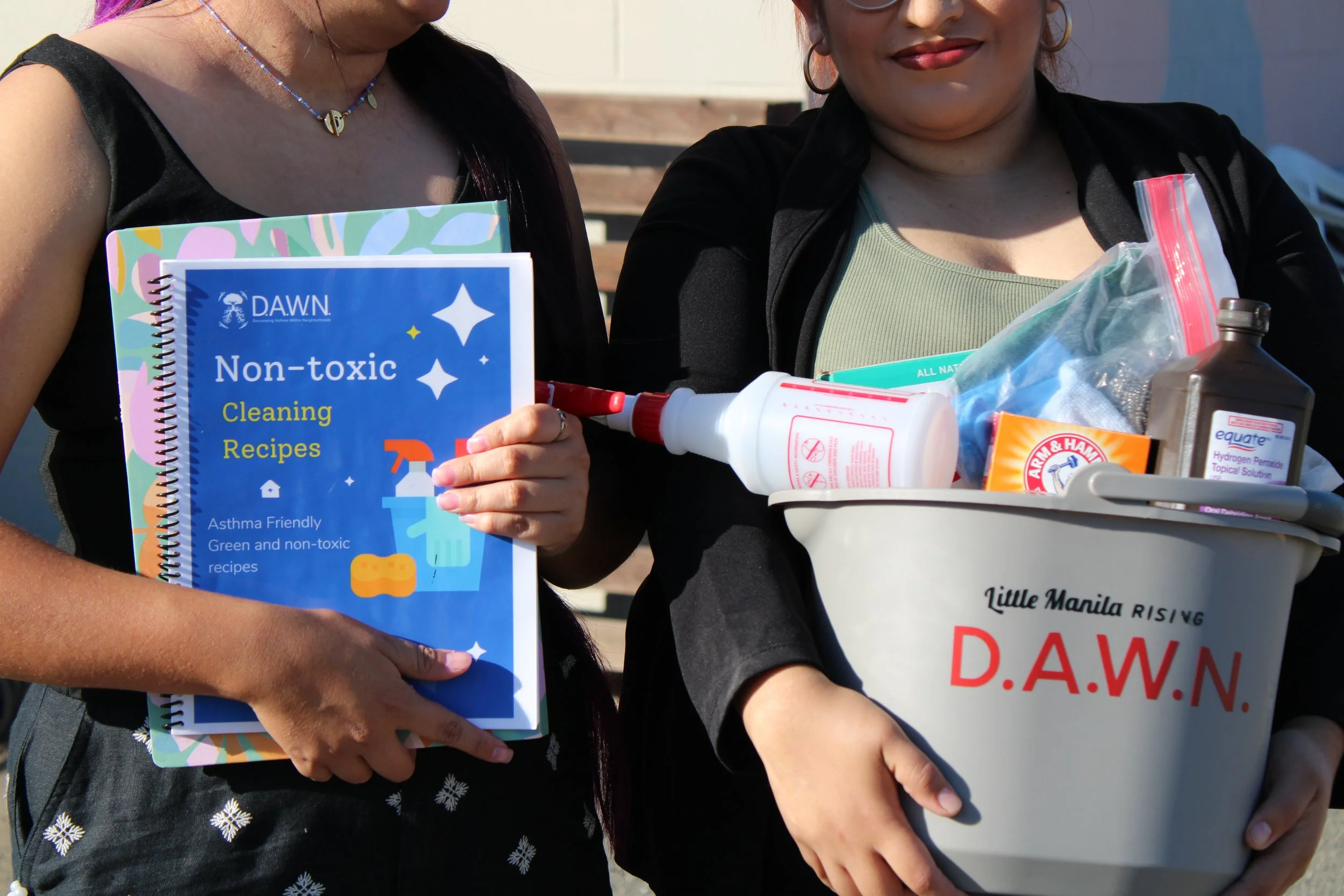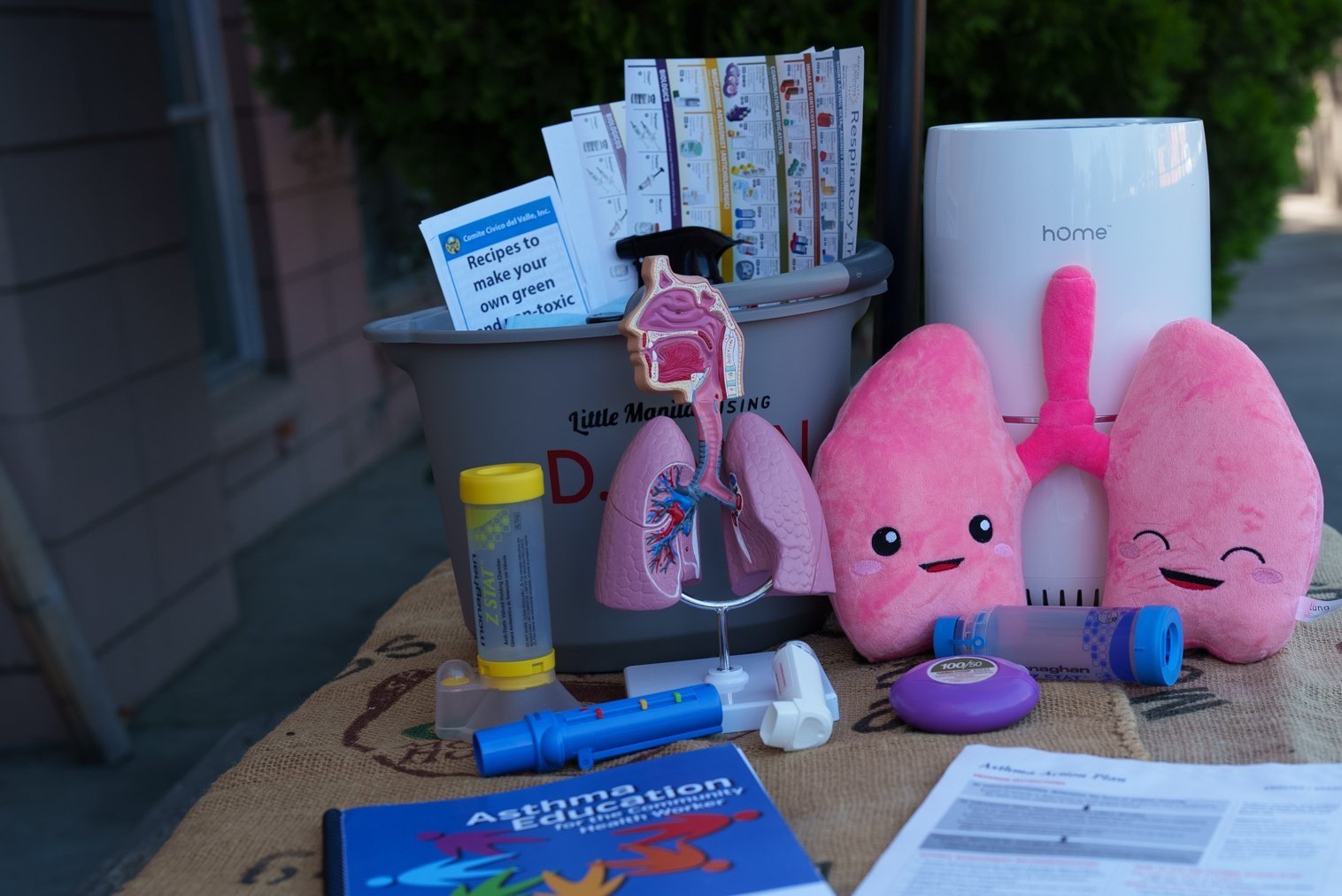

The DAWN Program (Decreasing Asthma Within Neighborhoods) was created in response to the sudden passing of our co-founder, Dr. Dawn Bohulano Mabalon, from an asthma attack. From this loss, we built a program dedicated to supporting communities impacted by poor air quality and related health conditions, including asthma.
Today, the DAWN Program focuses on two key areas: Asthma Mitigation and the Monitoring Air Program (MAP), both designed to improve community health and advance environmental awareness.
DAWN Monitoring Air Program (MAP)
Since 2021, the DAWN Monitoring Air Program (MAP) has partnered with residents, businesses, and community organizations to install air quality sensors and provide access to accurate, real-time data on the invisible threat of air pollution, particularly PM2.5. In a region with some of the worst air quality in the nation, we recognize that prolonged exposure shortens lives and increases the risk of asthma and other serious health conditions.
Participants in our program receive
-
Air Pollution - is the contamination of the atmosphere by harmful chemicals, gases, or particulate matter which is linked to health concerns
The main contributors are burning fossil fuels, industry, transportation, and wildfires
Particulate Matter (PM)- is particle pollution
a mixture of different airborne particles
a mixture of tiny solid particles and liquid droplets floating in the air, including dust, dirt, soot, and smoke
PM2.5 are fine particles that are ≤ 2.5 micrometers in diameter
For reference: your hair is about 70 microns and sand is 90 microns in diameter
PM 2.5 is dangerous because they can penetrate into the lungs and enter your bloodstream leading to cardiovascular or respiratory harm (including asthma flare ups)
Long-Term Exposure is linked to reduced lung development in children, heart attacks, strokes, and cardiovascular diseases.
PM 2.5 is measured in micrograms per cubic meter (µg/m³) - The higher the number, the dirtier, and more harmful the air is.
-
Sensitive groups are considered more at risk and include: children, elderly, pregnant people, and those with respiratory or cardiovascular diseases.
Sensitive groups are affected when PM 2.5 levels reach 25* µg/m³
The greater population is generally affected when PM 2.5 levels reach ______
On a bad air day it is suggested to:
Turn on an air purifier
Wear N95 masks when spending extended time outside
Do not exercise outdoors if possible (including yard work, or children playing outdoors)
If you have asthma, make sure you keep your rescue inhaler with you
-
What is my district?
See if you qualify for a free air purifier – with this link
“Or email us to see how we can help see how you qualify for a free air purifier”
What number will be reaching out to me?
“Once you sign up you will receive automated texts from the phone number ________”
please save this number to your contacts
For example save contact as “Air Quality Alerts”
Example of the text message they will receive
“LMR Air Quality Alert: Stockton is currently experiencing unhealthy air quality in neighborhoods Midtown,Northeast Stockton due to elevated levels of fine particulate matter (PM2.5).
Limit prolonged outdoor exertion
Run an air purifier, if available
Check on family/friends sensitive to air pollution
-
Through the MAP program, you can sign up to receive air quality alerts! Tap here for details.
The DAWN Air Monitoring MAP
The DAWN air monitoring MAP collects air quality information from over 80 air monitors throughout Stockton, providing a more localized and detailed view of what air quality in your neighborhood looks like.
Receive an Air Monitor for Your Home
You can sign up to become a part of this air monitoring network! By placing an air monitor at your home or work you can help us create a more accurate understanding of air quality in your neighborhood. Send us your contact info using the form below and we’ll contact you for how you can be involved.
Sign Up for Air Quality Alerts
Narrative describing alerts